Want to get a bird's-eye view? The Philip the Fair Tower invites you to discover Villeneuve lez Avignon From a unique perspective. From the summit, an exceptional panorama unfolds, encompassing the Palais des Papes, the Pont d'Avignon, the Rhône River, and Mont Ventoux. A visit that blends history, culture, and breathtaking landscapes.
Why visit the Philippe le Bel Tower in Villeneuve lez Avignon ?
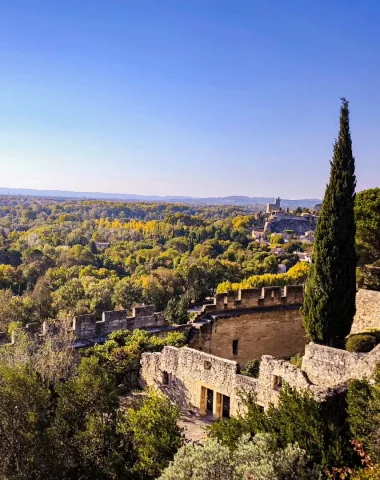
Dominating the banks of the Rhône for over seven centuries, the Philip the Fair Tower is one of the iconic monuments of Villeneuve lez Avignon Visible from Avignon It is an essential landmark in the Greater Avignon landscape. Much more than a simple medieval tower, it tells the story of the close relationship between the two banks of the Rhône. Particularly appreciated on the bright days of autumn and early winter, the tower offers a 360° panoramic view of Greater Avignon. Palais des Papes , the Pont Saint-Bénézet , the Rhône Valley and, on the horizon, the famous Mont Ventoux .
A fortress closely linked to the history of Avignon
Built at the beginning of the 14th century on the initiative of King Philip the Fair, the Philip the Fair Tower It testifies to the political rivalries and strategic importance of the Rhône in the Middle Ages. Built at the western end of the Saint-Bénézet bridge It ensured the protection of this major thoroughfare linking Avignon to the Kingdom of France. A true symbol of royal power, the fortress played a role in controlling trade and travel between the two banks of the river. Today, it stands as one of the most remarkable examples of medieval heritage. Villeneuve-lès-Avignon n and Greater Avignon.


The best viewpoint overlooking Avignon and the Palace of the Popes
From its 27-meter height, visitors enjoy a unique view of the Palais des Papes , the Pont d'Avignon , the city walls and the Rhône valley.
This perspective allows us to understand at a glance the complementarity between Avignon et Villeneuve lez Avignon On one side, the imposing papal city; on the other, the cardinal city which in the Middle Ages hosted many cardinals' residences and places of power.
For photography enthusiasts as well as history buffs, climbing to the top of the Philippe le Bel Tower is an unmissable moment during a stay in Greater Avignon.
The ideal entry point to discover Villeneuve lez Avignon
Visit the Philip the Fair Tower is also an excellent way to begin exploring the major heritage sites of Villeneuve lez Avignon .
Just a few minutes' walk away are the Chartreuse , one of the largest Carthusian monasteries in Europe, the majestic Fort St-Andre which overlooks the Rhône, Saint Andrew's Abbey and its remarkable gardens (a monument open from March to the end of October), as well as the Pierre-de-Luxembourg Museum famous for its collections of medieval art.
These monuments, among the most prestigious in the region, bear witness to the exceptional influence that the area has enjoyed. Villeneuve lez Avignon during the Avignon Papacy. Together, they form one of the most remarkable heritage ensembles of Provence and Occitanie .
La Chartreuse – Centre national des écritures du spectacle
Historical site and monument
Book online From 8 € / adult


A living monument in the heart of Greater Avignon
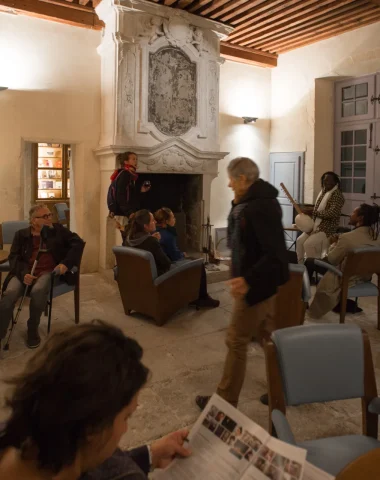
Beyond his medieval architecture , the Philip the Fair Tower regularly hosts exhibitions and offers a museum space that allows visitors to better understand the history of the city, the Rhône and the Pont Saint-Bénézet .

Plan your visit and take advantage of the great deals
To discover the Philippe le Bel Tower and other must-see sites Villeneuve lez Avignon and in Avignon, several offers allow you to visit more and spend less.
- Avignon City Pass : access to the Palace of the Popes, the Pont d'Avignon, Fort Saint-André, the Abbey of Saint-André, the Lambert Collection and many other cultural sites.
- Ticket 5 Monuments of Villeneuve-lez-Avignon: Enjoy access to the Philippe le Bel Tower, the Charterhouse, Fort Saint-André, Saint-André Abbey (closed from November to March), and the Pierre-de-Luxembourg Museum for €20*. Valid for one year from the date of purchase, this ticket is available for purchase directly at the monuments. Please note: the price will increase to €22 from 2027.
- Wivisits : free smartphone tours to discover the heritage of Greater Avignon independently.
- Heritage & Culture Map : available free of charge at the Greater Avignon Tourist Office to easily locate monuments, museums and cultural sites.
Ideal solutions for exploring the treasures of Villeneuve lez Avignon , Philip the Fair Tower au Palais des Papes , while optimizing its budget.


An unmissable visit between Avignon and Villeneuve lez Avignon
Visit the Philip the Fair Tower , it is to discover one of the strongest symbols of the historical link between Avignon et Villeneuve lez Avignon Both a royal fortress and a witness to the history of the Pont d'Avignon And a remarkable viewpoint overlooking the Rhône, it offers an ideal introduction to the treasures of the cardinal's city. Associated with the Chartreuse visit us at the Fort St-Andre , To the Saint-André Abbey and Pierre-de-Luxembourg Museum she makes Villeneuve lez Avignon an unmissable destination for all lovers of heritage, history and exceptional panoramas.
Themes